

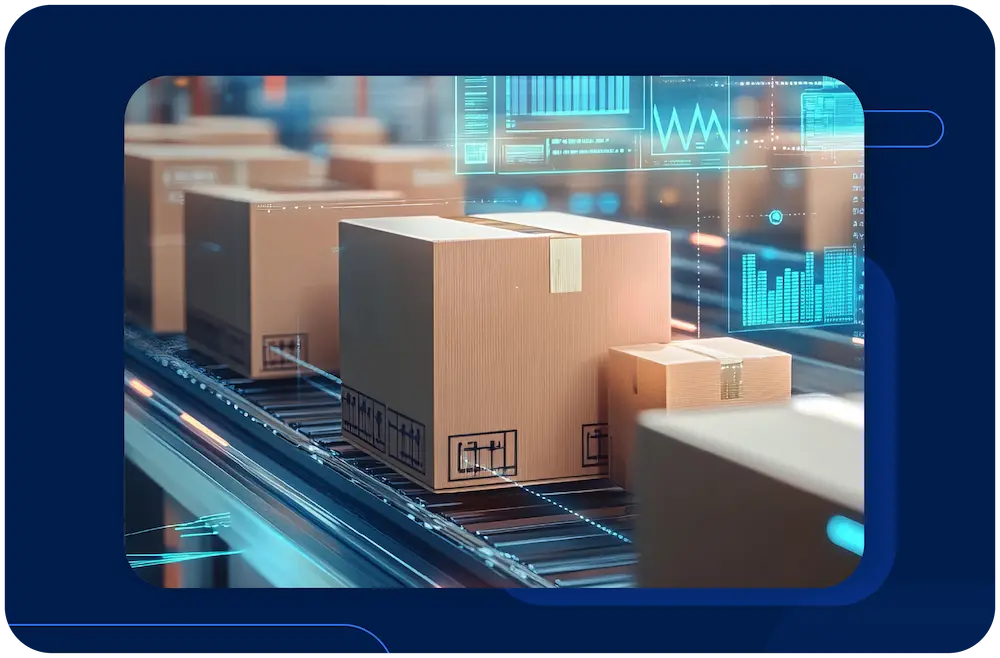
An OMS (Order Management System) is software that centralizes, processes, and continuously tracks customer orders across their entire lifecycle—from initial placement on any sales channel to final delivery confirmation. Its primary purpose is to unify order processing across e-commerce storefronts, physical retail stores, and online marketplaces into a single source of truth, eliminating overselling caused by phantom inventory while delivering real-time operational visibility to both business teams and shoppers.
Why an OMS is essential for e-commerce operations
Without a centralized OMS, each sales channel operates using its own isolated rules and information silos: digital storefronts rely on e-commerce platform checkouts, physical stores use POS terminals, and online marketplaces use seller dashboards.
Critical problems arise when these disconnected systems fail to communicate in real time: a single inventory unit can appear available for purchase across multiple channels simultaneously. An OMS resolves this friction by consolidating core order data—purchased items, sales origin, allocated inventory pool, and fulfillment status—into one central operational view accessible company-wide.
How an OMS works: the complete order lifecycle
An Order Management System orchestrates customer orders through every key operational milestone:
- Centralized capture: Instantly logs purchase orders regardless of origin channel (e-commerce website, marketplace, mobile app, or retail POS).
- Inventory validation: Verifies actual physical stock availability prior to confirming sales commitments to prevent stockouts.
- Source allocation: Assigns orders to designated fulfillment origins (warehouse, distribution center, or retail store).
- Real-time tracking: Monitors status updates through picking, packing, staging, and last-mile carrier dispatch.
- Lifecycle closure and post-sales: Confirms customer delivery and processes returns or exchanges with complete traceability back to the original order.
All order data remains visible in real time for operational teams as well as end consumers, who can check delivery progress independently without contacting customer support.
Core use cases for an OMS in retail and e-commerce
Implementing an Order Management System solves specific operational bottlenecks in multi-channel commerce:
Multi-channel order consolidation
Manage order volume across disparate sales channels from a single operational control panel without duplicate software tools.
Real-time inventory availability control
Instantly validate live stock availability before order confirmation to eliminate overselling and phantom inventory issues.
Self-service buyer tracking visibility
Provide automated order tracking portals that give shoppers real-time status updates from order placement through final delivery.
Reverse logistics and returns management
Process exchanges and returns seamlessly while linking claims directly to original order records and sellable inventory pools.
IT ecosystem integration
Synchronize order flows seamlessly with enterprise ERPs, WMS platforms, and 3PL logistics carriers without isolating sales records.
OMS vs. ERP: key operational differences
Businesses frequently confuse an OMS with an ERP because both systems interact with sales data, yet they serve distinctly different operational roles:
| Operational Aspect | ERP (Enterprise Resource Planning) | OMS (Order Management System) |
|---|---|---|
| Primary Focus | Financial management, accounting, procurement, and enterprise resources. | Lifecycle Management: End-to-end tracking and processing of customer orders. |
| Operational Scope | Organization-wide functions (finance, HR, invoicing, vendor management). | Fulfillment & Inventory: Multi-channel sales integration and order fulfillment. |
| Update Frequency | Administrative logging and periodic financial closing cycles. | Real-Time: Continuous daily order operations and live status updates. |
| Integration Relationship | Receives financial and transactional data following purchase completion. | Direct Integration: Feeds accurate, real-time operational order data into the ERP. |
An ERP and an OMS are complementary systems: an ERP requires integration with a specialized OMS to ensure administrative data matches real-world operational fulfillment.
When your e-commerce operation needs an OMS
Clear operational signs indicate that your business has outgrown its current tech stack:
Disconnected multi-channel sales
Selling across multiple digital or physical channels without a unified, real-time order management dashboard.
Frequent overselling incidents
Experiencing high order cancellation rates and customer friction due to sales accepted against phantom inventory.
Spreadsheet-dependent operations
Relying on manual Excel files or manual data entry to reconcile sales figures and verify order progress.
Customer support overwhelm
Handling constant customer inquiries regarding delivery status that require manual investigation by support agents.
Key benefits of deploying an OMS in omnichannel retail
Unifying order management drives direct improvements across operational efficiency and customer retention:
- Drastic reduction in order cancellations: Ensures every accepted purchase is backed by confirmed physical inventory.
- Enhanced customer transparency and higher NPS: Shoppers easily check order status self-service without support intervention.
- Increased operational labor efficiency: Eliminates wasted hours spent manually reconciling sales data across platforms.
- Reliable KPI reporting: Generates accurate real-time metrics on fulfillment throughput, cycle times, and fill rates.
From OMS to DOM: the next evolution for scaling operations
An OMS logs customer orders and tracks fulfillment progress, but it does not dynamically determine the optimal shipment origin when an enterprise operates multiple warehouses, dark stores, or retail locations.
That intelligent routing decision is executed by a Distributed Order Management (DOM) engine: analyzing live stock levels, customer location, node capacity, and shipping rates in real time to route each order to the most cost-effective fulfillment point. If your business operates multiple dispatch nodes, learn more about this operational evolution in our article "What is Distributed Order Management (DOM)?" on the Janis Commerce blog.
Frequently asked questions
What is the difference between an OMS and an ERP?
An ERP manages overall enterprise administrative, financial, and accounting processes. An OMS specifically focuses on the order lifecycle: capture, inventory validation, allocation, tracking, and delivery fulfillment. Both systems integrate seamlessly but serve distinct purposes.
When does my e-commerce business need an OMS?
When you sell across multiple channels without centralized order visibility, experience frequent overselling or phantom stockouts, rely on manual spreadsheets to track order statuses, or cannot provide self-service order tracking to customers.
What benefits does an OMS bring to an omnichannel operation?
An OMS eliminates inventory errors and order cancellations, improves customer experience through real-time tracking visibility, reduces operational time spent reconciling multi-channel sales data, and provides reliable metrics to measure key operational KPIs.
Evaluate whether your operation needs an OMS (or more)
Janis Commerce unifies order management with inventory control, logistics fulfillment, and sales channels inside a composable, API-first platform. It integrates effortlessly with legacy ERPs, WMS platforms, and 3PL carriers (+100 pre-built integrations) without replacing your existing tech stack. If you are evaluating options to streamline order operations, let’s discuss the right solution level for your business today.
Request a demo
.jpg)


