The Unified Commerce Imperative: Redefining Cost-to-Serve in Retail
By Francisco Mato, Co-Founder & CEO, Janis Commerce
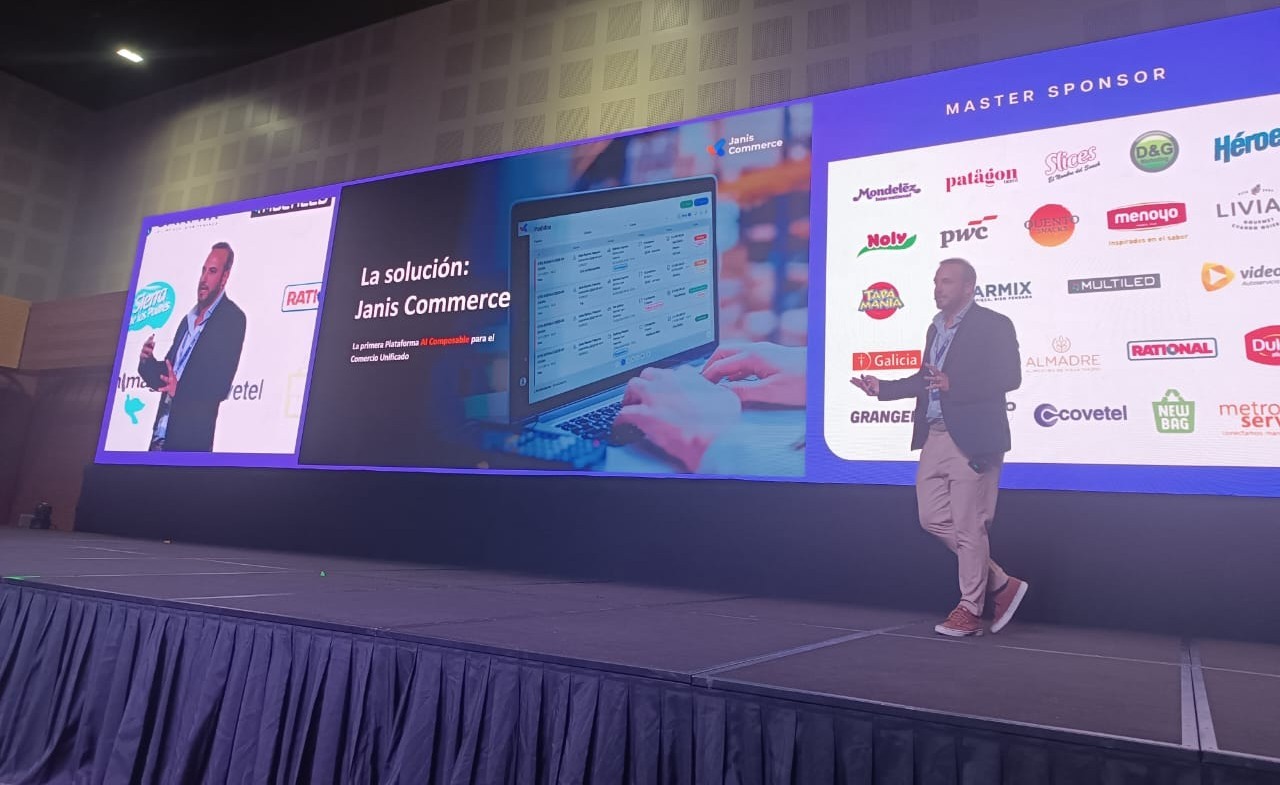
A few days ago, we were present at the Retail Day Buenos Aires, one of the most important gatherings in our industry in the region, and I had the opportunity to speak on the main stage in front of hundreds of executives, colleagues, and leaders from the retail world in Latin America. During our talk "Technology & Cost to Serve", I wanted to bring an uncomfortable but urgent conversation to the table: the imperative need to look beyond the last mile to rescue business profitability.
Francisco Mato, CEO & Co-Founder, Janis Commerce
Over the last decade, our industry has been in a frantic race towards digitalization, focusing almost all its efforts on one area: final consumer delivery (B2C). We've seen multi-million dollar investments aimed at optimizing door-to-door service and the gig economy. However, while we try to solve the river's mouth, we are ignoring the real margin bleed occurring upstream: in internal logistics and B2B replenishment that feeds every store, dark store or point of sale.
The Latin American Context: Operating in "Hard Mode" and Margin Pressure
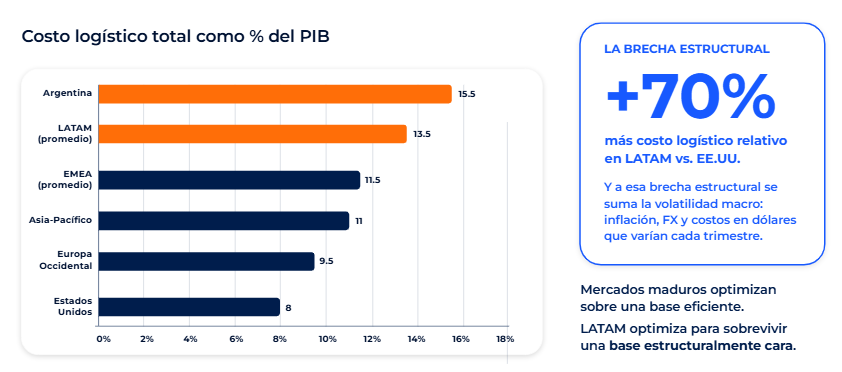
Managing supply chains in Latin America under traditional models is no longer a tactical challenge; it's a survival challenge. In our region, we operate in what I like to call "hard mode." Global indicators are clear: the structural gap is immense, and LATAM averages a relative logistics cost to GDP that is 70% higher than that of mature markets like the United States.
Today, we face an extremely demanding market. Constant pressure on margins coexists with consumers who expect immediacy, real-time availability, and seamless, friction-free experiences. This reality creates a clear tension between commercial growth and profitability.
Given this scenario, we must understand that the main challenge is no longer just about selling more, but about flawlessly executing every operational process. True success lies in ensuring sales growth coexists with relentless cost discipline.
Sources: World Bank, Armstrong & Associates, ALALOG 2024
If we add macroeconomic volatility, inflation, and variable costs to this structural inertia, the equation for the Cost-to-Serve (the true cost of serving and delivering a product to the customer) can consume more than $30\%$ of total revenue in mass consumption. In operations characterized by "low margin, high volume" (low margin and high volume), the Cost-to-Serve is becoming the primary and most critical competitive arena in modern retail.
The true cost of an empty shelf
When a consumer encounters an empty shelf, the impact on the retailer quickly escalates from minor to critical: from product substitution to complete abandonment of the purchase or, even worse, a permanent shift to a competitor. These stockouts directly impact conversion, destroy brand loyalty, and drastically erode the sector's already tight margins.
Global industry statistics report aggregate losses of billions of dollars annually solely due to out-of-stock merchandise on shelves. What's alarming is that most of these disruptions don't stem from external supply chain factors, but from internal failures:
🔹Disconnected planning.
🔹Warehouse Management Systems (WMS) operating in silos.
🔹Decisions based on purely reactive historical data.
The physics of internal B2B logistics is asymmetrical to that of B2C. While e-commerce handles individual units with dynamic delivery windows, store replenishment moves full pallets and consolidated loads under rigid windows. A last-mile failure affects a localized user; a B2B replenishment breakdown paralyzes an entire branch and impacts thousands of consumers simultaneously.
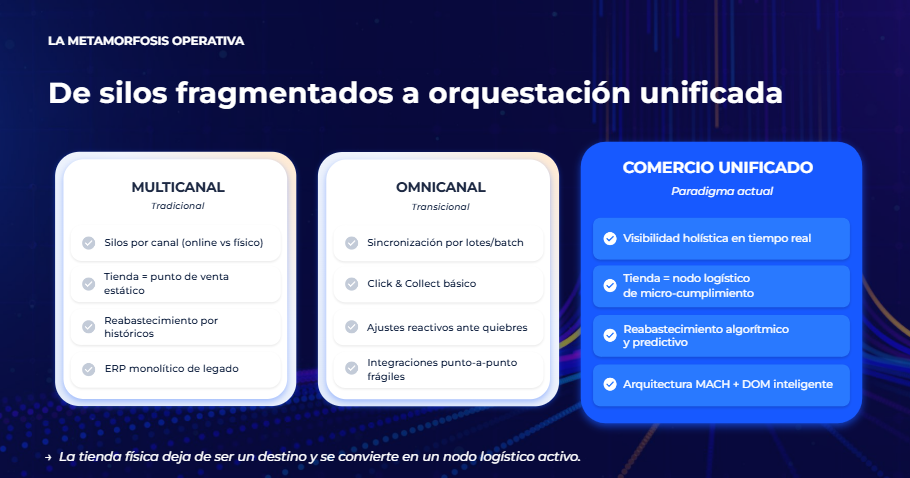
The Operational Metamorphosis: The evolutionary path from traditional retail silos to the logistical potential of Unified Commerce.
Unified Commerce: From theory to real-world orchestration
To solidify the change demanded by today's market, we must evolve from the transitional omnichannel model—characterized by fragile point-to-point integrations and batch stock updates (batches)— towards true Unified Commerce. In this new paradigm, the physical store ceases to be a mere static sales destination and transforms into an active logistical micro-fulfillment node (micro-fulfillment).
At Janis Commerce, we have been driving a clear conceptual evolution: moving from traditional operational management based on rigid rules to an operation orchestrated by intelligent real-time decisions. The unified commerce we propose means that sales channels and logistical processes cease to be isolated compartments and begin to operate as a single integrated neural network, coordinated by live data.
How do we achieve this without drastically increasing CAPEX in infrastructure or being forced to replace legacy ERP systems?
The answer lies in flexible orchestration technology. By coupling an intelligent Order Orchestration layer (Distributed Order Management or DOM) alongside optimized WMS and TMS systems, and coordinating everything powered by Janis Inventory (our core inventory management module), we don't replace what already works: we enhance it and give it real-time traction under modern MACH architectures (Microservices, API-First, Cloud-Native, and Headless).
Data from the Unified Commerce Benchmark confirms this:
🔹Unified retailers achieve 3x growth in revenue.
🔹Increase customer loyalty by 1.7x.
🔹Reduce fulfillment logistics costs by up to 31% compared to fragmented competitors.
🔹Automation generates return on investment (ROI) within 3 to 6 months, reducing stockouts by up to 60%.
The ROI equation: Key financial and operational impact indicators following the automation and centralization of logistics execution.
The operational agility of leaders in LATAM
This movement is already a tangible reality in the region. We actively support the main market players in evolving their rigid models towards intelligent and adaptive ecosystems:
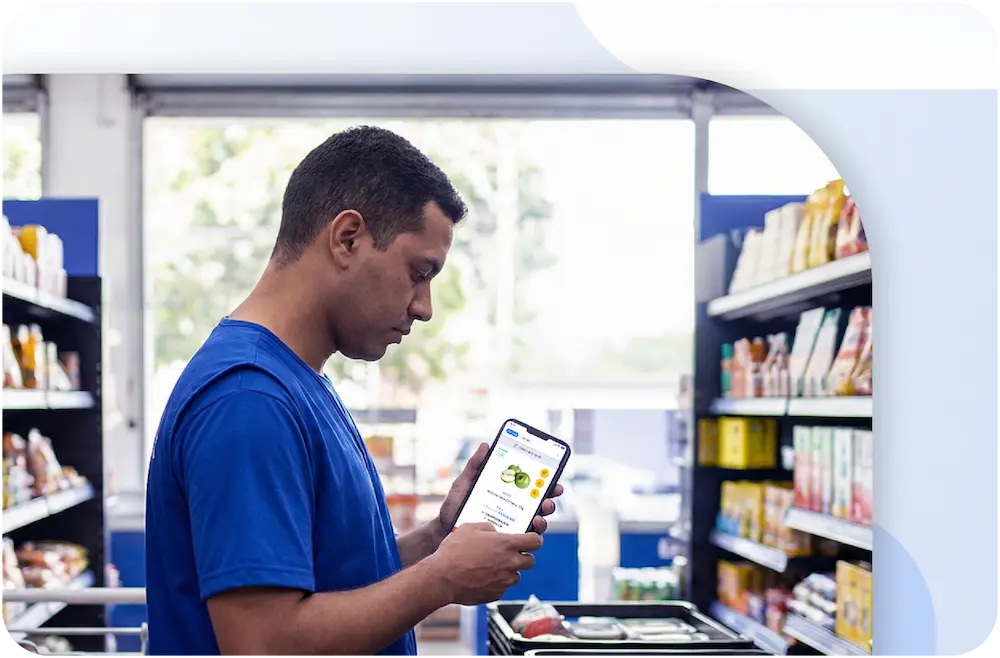
🔹 Massive reconfiguration strategies: In markets that are fundamentally recalculating their profitability matrix today, large chains are centralizing their flows. By unifying hundreds of stores under a single operational brain, we digitize the pick & pack of in-aisle operators and automate real-time substitutions. This allows us to mitigate macro impact and efficiently orchestrate massive networks of millions of annual orders.
🔹 Anticipation and autonomy strategies: Those players who anticipated the change in time implemented unified commerce models to provide logistical autonomy to their stores and dark stores. By optimizing replenishment and internal routing with predictive ordering algorithms, they now navigate complex scenarios with relentless cost discipline and outstanding operational agility.
Janis Inventory & Artificial Intelligence: The true brain of an autonomous operation
360° Volumetric Optimization, Janis Commerce
At Janis Commerce , we perfectly understand that profitability theory is useless if field execution is complex, slow, or traumatic to adopt. That's why our philosophy is not about a "rip & replace" (rip and replace) of the company's core systems. We act as an agile intelligence layer, where the true protagonist of change is Janis Inventory, our inventory service designed to control, synchronize, and optimize multichannel stock in real time.
To respond to modern retail trends, we are incorporating a new generation of capabilities based on Artificial Intelligence and predictive models directly aimed at optimizing the Cost-to-Serve:
🔹Stock synchronization and intelligent real-time decisions: We break down silos by unifying physical and logical inventory. This allows the platform to automate assortment decisions, intelligent merchandise distribution, and real-time procurement strategies, reducing logistics preparation times by up to 45%.
🔹Multidimensional space optimization: Efficient retail hinges on every cubic centimeter. Therefore, our intelligence layer comprehensively optimizes space utilization: not only on store shelves and in physical store warehouses, but also in efficient packaging cubing, load consolidation in transport vehicles, and efficiency in reverse logistics processes.
🔹Transition to autonomous and scalable operations: We believe in a model where systems resolve complexity without requiring constant human intervention. Today, key processes such as incident management, operational status changes, and automatic delivery rescheduling are executed 100% autonomously. This allows retailers to synchronize their operation's real capacity with customer expectations and scale the business seamlessly.
🔹99.8% accuracy to safeguard Cost-to-Serve: Elevating inventory accuracy to a world-class level and eradicating stockouts has a direct impact on the financial bottom line. We achieve a reduction in the Cost-to-Serve overall by 10% to 15%, ensuring that the technology pays for itself and is amortized in a matter of months, not years.
The Retail Imperative 💡
In the era of modern commerce, operational inertia is no longer a viable option; it's a declaration of obsolescence. The trend is not to keep adding isolated tools, but to build a unified intelligence layer that enables dynamic, efficient, and scalable orchestration of the entire supply chain.
Redefining the Cost-to-Serve through technology is not just a technical objective: it's the imperative to consolidate change and ensure truly profitable and sustainable growth in our region.
If your organization is currently facing these profitability and scalability challenges, I invite you to contact our strategic consultants at Janis Commerce. Let's analyze your operation together and find the best way to support you in your reinvention process.
Discover the primary types of warehouse order picking (discrete, zone, batch, and wave picking), when to apply each methodology, and how to increase picker productivity using dynamic route sequencing.
Discover what e-commerce fulfillment is, its fundamental stages, and how to choose between in-house, 3PL, dropshipping, marketplace, or distributed models to optimize your retail delivery costs and speeds.